High Atlas Mountains Morocco: Why Visit in 2026 and Complete Travel Guide
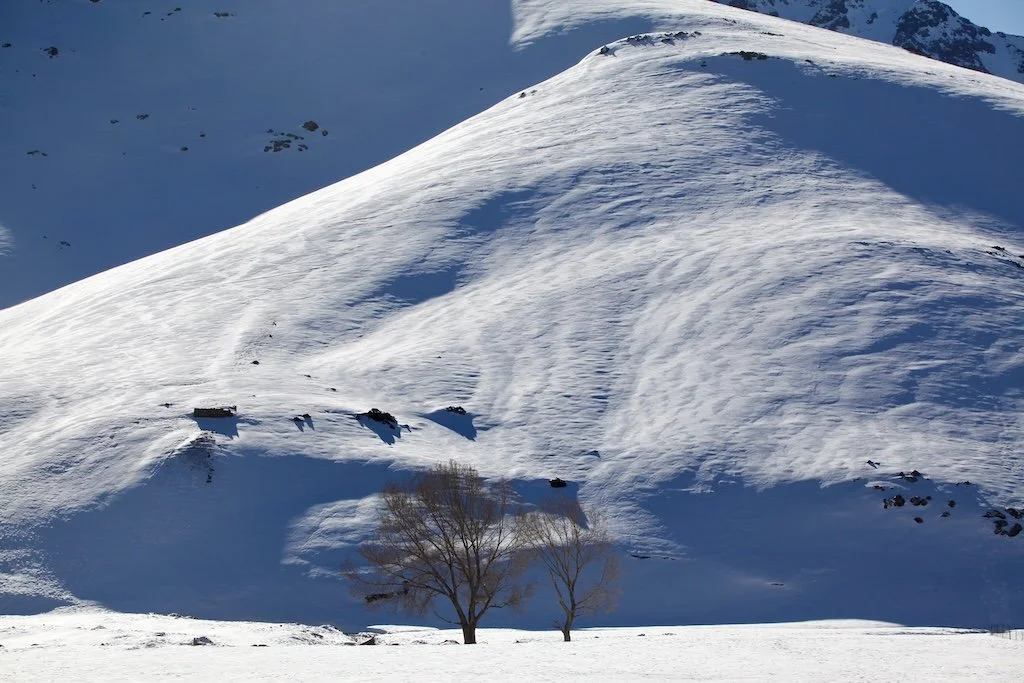
Snow in Oukaimeden, February 2026
Why Visit the High Atlas Mountains in 2026?
Often described by locals as “l’Maghrib nsiti” – forgotten Morocco, the High Atlas Mountains offer travellers something increasingly rare: space, silence, and strong community roots.
Home to Morocco’s Amazigh (Berber) communities, this region is where life is deeply connected to the land, seasons, and tradition. Following the devastating September 2023 earthquake, many villages have shown extraordinary resilience, rebuilding homes, roads, guesthouses, and mountain trails while preserving cultural identity.
I have always found myself drawn to the Atlas Mountains for its wild spaces and for time spent with the Amazigh, who embody a healthy mindset, a simple way of life, and an abundance of time.
For travellers planning a Morocco itinerary in 2026, the High Atlas provides:
A powerful cultural experience beyond the medinas
Outdoor adventure in North Africa’s highest mountain range
Authentic village life within easy reach of Marrakech
A meaningful way to support local, community-led tourism
If you’re searching for “High Atlas Mountains Morocco travel guide,” “Atlas Mountains trekking,” “where to stay in the Atlas Mountains” or “best day trips from Marrakech,” this guide covers it all.
This post contains affiliate links. If you book through them, I may earn a commission at no extra cost to you.
Who Is the High Atlas For?
The High Atlas region appeals to:
Mountain lovers and outdoor adventurers
Adventurous travellers
Trekkers and summit seekers
Skiers looking for unique destinations
Culturally curious travellers
Those seeking digital detox and wellness retreats
Travellers wanting to experience Amazigh culture
I go to the Atlas Mountains when I need a fresh perspective and a reminder of the beauty and peace that come from community, presence, and slowing down.
Whether you have two days from Marrakech or two weeks exploring Morocco, the Atlas Mountains add depth to any itinerary.
Best Things to Do in the High Atlas Mountains
Skiing in Morocco: Oukaimeden
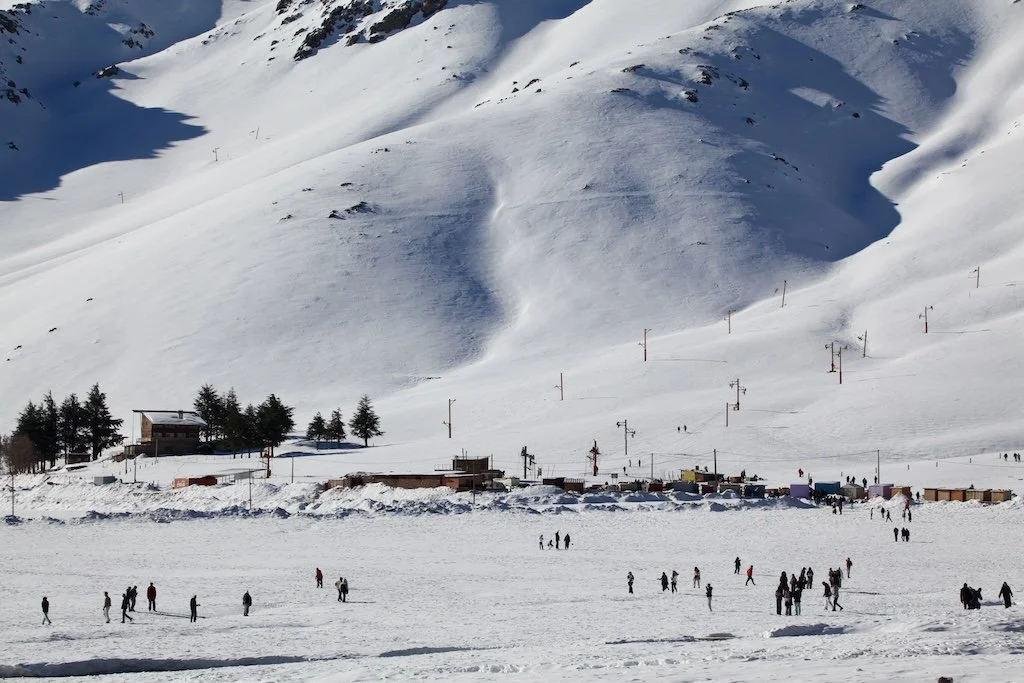
Oukaimeden Ski Resort, Morocco
From December to mid-March, the High Atlas transforms into an alpine playground. The 2026 ski season is expected to be strong following recent abundant snowfall at altitude, making it a great year to see snow in Morocco.
At Oukaimeden (3,273m), Africa’s highest ski area, you’ll find:
Backcountry and ski touring terrain
Unpisted slopes
Snowshoeing routes
Local families experiencing snow for the first time
Although chair and button lifts have been inactive in recent years, the atmosphere remains wonderfully authentic. Mules and local porters assist with ski transport, and wooden rental huts at the bottom of the slopes offer retro skis and boots.
The scenery in Oukaimeden ski resort looks more French Alps than Sahara, but there's a distinctly Moroccan touch: we loved seeing families arrive from Marrakech to see snow for the first time, meeting advanced skiers from Casablanca talking about their lifelong passion, watching friends snowshoeing up gentle slopes, and fearless kids hurtling down on sleds made from old skis.
Expect:
French alpine-style dishes, ‘tartiflette + vin chaud’ alongside Friday couscous at Chez Juju
Mint tea and tagines served in mountain-facing cafés
Locally sourced aprés-ski snacks: honey, walnuts, and nougat sold piste-side
Stay at simple refuge/chalet-style hostels or apartments in Oukaimeden
Surreal experience of skiing in Morocco
A steep mountain road to reach the resort
Advanced skier? Get in touch for a recommended guide who can offer ski touring in Oukaimeden, Toubkal, and Tachdert valleys.
Trekking Mount Toubkal and nearby summits
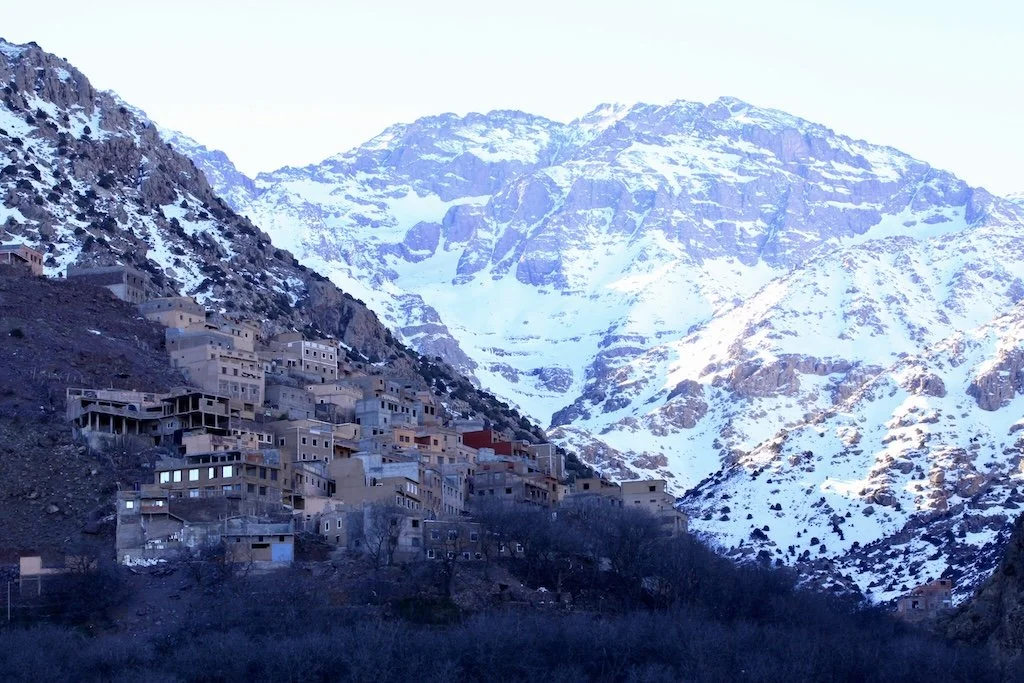
Mount Toubkal, as seen from Kasbah du Toubkal
Serious trekkers are drawn to Mount Toubkal (4,167m), North Africa’s highest peak.
Most visitors base themselves in Imlil, the hiking hub and best-known centre for trekking in Morocco. Imlil is a small village just 90 minutes drive from Marrakech, where you can find simple homestays, like Smile House, traditional riad guesthouses, like Dar Imlil, and boutique hotels, like Kasbah du Toukal.
Read our ‘Where to Stay in the Atlas Mountains’ article for more inspiration.
The classic itinerary:
Day 1: Trek from Imlil to Toubkal Refuge
Day 2: Pre-dawn summit ascent
Sunrise views across the Atlas range
The two-day Mount Toubkal trek is one of the most accessible high-altitude summits in the world. It can get busy. Mount Toubkal summit can be reached in a two-day trek from Imlil, as listed above.
If you have 3 days, you can acclimatise by combining the Talamrout summit (2700m) on Day 1, which offers views of Mount Toubkal, spend a night in Imlil, then on Day 2 begin your ascent to the Toubkal summit.
Gentler Hiking: Ouirgane & the Foothills
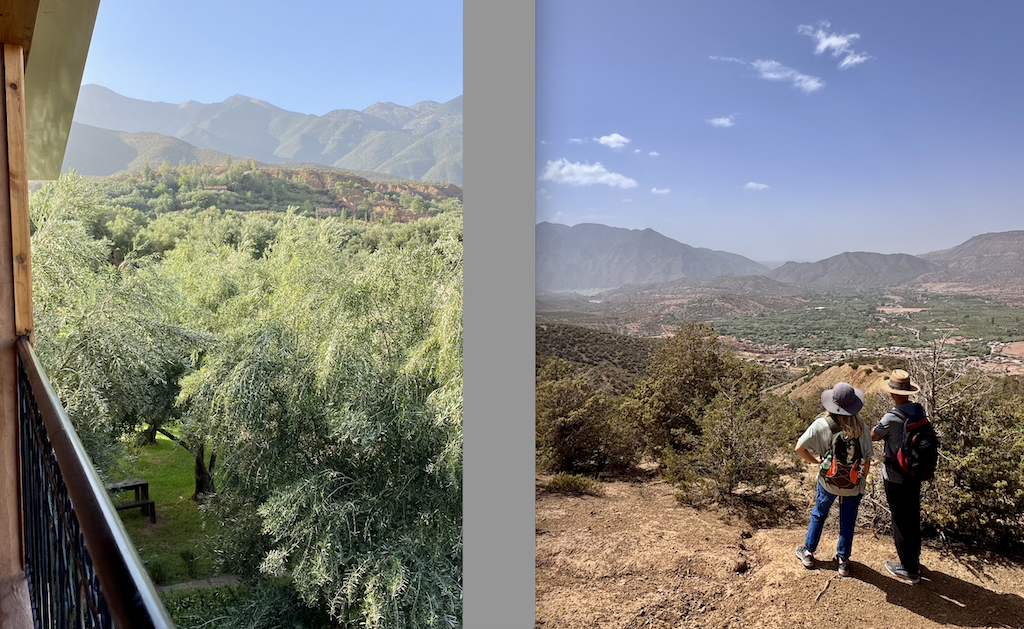
Ouirgane Valley views
For lower altitude and leafy trails, the Ouirgane Valley in the foothills of the Atlas offers:
Easy to medium walks through olive groves and fruit farms
A peaceful dam and salt oasis
Gentle walks through traditional Amazigh villages
Excellent eco-lodges, like Ouirgane Ecolodge, are ideally located for Atlas Mountains day hikes
Luxury hotel mountain retreats like Olinto
Other accommodation options suitable for Ouirgane Valley hiking can be found on this blog.
Ideal for spring and autumn travel, this is one of the best easy hiking areas near Marrakech.
Mountain Biking in the Atlas
The varied terrain, from rocky descents to long mountain passes, makes the High Atlas ideal for:
Enduro riders
Gravel cyclists
Experienced cyclists and adventurous explorers
Multi-day biking expeditions
If you’ve been dreaming about getting away from crowded tourist routes and mountain biking in Morocco, check out this 7-day mountain biking adventure. A locally guided tour from Marrakech to Ait Ben Haddou with highlights being the Draa Valley, Dades Gorge, and a scenic drive back to Marrakech along the Tizi n’Tichka Pass (2,260 m).
There are plenty of Atlas Mountains cycling routes, and shorter guided mountain bike rides can be easily arranged from Imlil, the Ourika Valley, and the Ouirgane Valley.
Bouldering & Rock Climbing
Oukaimeden, the ski resort, is also internationally known for bouldering.
Further south, the terrain becomes dramatic as you approach the Sahara:
The Dadès Valley: oases, kasbahs and sculpted rock
“Patte des Singes” rock formations is a popular stop
Todra Gorge near Tinghir
As you head south from the High Atlas towards the Sahara, the mountainous terrain unfolds into the Dadès Valley. Oases filled with date palms, mud-built kasbahs (castles), and gorges carve a line through valleys. It’s a rock climbing and geologist’s paradise.
Todra Gorge, close to Tinghir, offers hundreds of climbing routes, from beginner climbs to vertical limestone walls. With towering red rock faces, perfect for rock climbing. There are believed to be some 400 climbs in the area, ranging from beginner spots to advanced climbs that scale the giant vertical walls of the gorge. Climb Tafraout is a handy guide to Todra Gorge climbing.
Tafraoute is another popular area for rock climbing Morocco, Jebel Adventures offers day tours from Agadir, and longer itineraries in the Tafraoute and the Jebel Lkest region.
Relax & Retreat
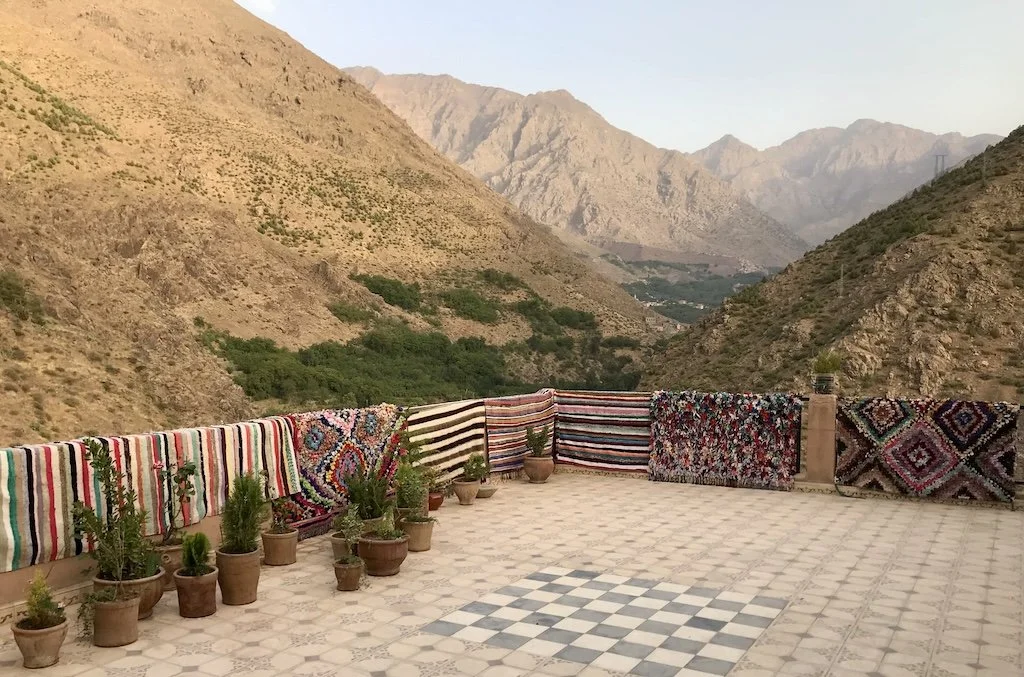
Plentiful roof terraces for yoga with a view, Berber Family Lodge
The Atlas Mountains are increasingly known for:
Yoga retreats
Meditation stays
Hammams
Mountain eco-lodges
Digital detox escapes
Shifting people’s perspective
Cosy and light spaces to read, reflect, and write
In Winter, look for a hotel with good heating and fireplaces, and in Summer, a pool, or a hotel on the shaded slopes will be a game-changer. Cooler temperatures than Marrakech make this an excellent (and popular) summer retreat destination.
Offering space, a slower pace, connection to nature, and a simpler way of living, it’s no wonder the Atlas Mountains are becoming a place for Atlas Mountains yoga retreats. Ecolodge and hotels offer spacious terraces and rooftops for yoga and meditation, and Kasbah du Toubkal even offers underfloor heating in their yoga room for your cosy Winter Morocco wellness retreats.
As a yoga teacher and regular practitioner, I am well-versed in organising yoga retreats. Contact me to discuss your Atlas Mountain wellness retreat.
Nature’s Larder: Food & Produce
The High Atlas is also one of Morocco’s richest agricultural regions.
Look for:
Olive oil cooperatives in Ouirgane
Honey from mountain apiaries
Rose water and oil, and other rose products from Kelaat M’Gouna (Valley of Roses)
Saffron harvests in the Ourika Valley (Oct–Nov)
Seasonal travel rewards visitors with blossom and harvest festivals, as well as local markets.
Traditional Atlas Cuisine
Food in the Atlas is darori, essential. Some of the best tagines I’ve had in Morocco have been at the ecolodges and the Atlas Mountains cafés, for their flavour, freshness, and slow-cooked caramelisation.
Expect:
Slow-cooked charcoal tagines
Hearty soups
Fresh bread baked daily
Couscous served communally on a Friday afternoon
Many guesthouses offer cooking classes, ideal for travellers interested in Moroccan culinary traditions.
Amazigh Rugs & Handicrafts
The women in the High Atlas produce some of Morocco’s most celebrated handwoven Amazigh (Berber) rugs. Traditionally woven at home or in cooperatives, rugs:
Tell family stories through symbols
Provide insulation in the homes during winter
Offer meaningful souvenirs that support women’s income
Scenic Drives & Mountain Passes
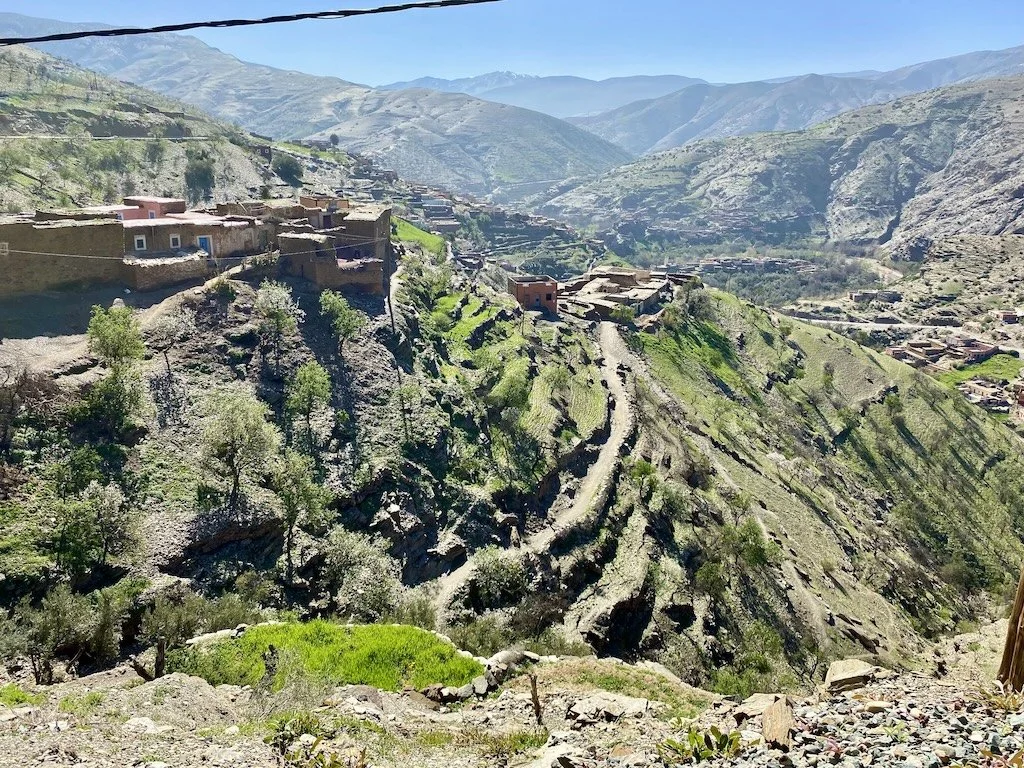
Views roadside in the High Atlas Mountains
For confident drivers, the High Atlas offers some of Morocco’s most spectacular road trips and scenic drives.
The dramatic passes of Tizi n'Tichka and Tizi n'Test are engineering feats with sweeping views.
Winter travellers should check conditions carefully, as snowfall can make passes temporarily impassable.
Travel tip: before setting off on your Atlas Mountains road trip, check with locals (your hotel, a guide) for the best route at that time of year. Rainfall, snow, and extreme heat can cause road closures, and a single road closure in the Atlas Mountains can lead to a long detour.
When Is the Best Time to Visit the High Atlas?
Spring (March–May): Wildflowers, rose season
Summer (June–August): Cool mountain escape from Marrakech heat
Autumn (September–November): Harvest season, stable trekking weather
Winter (December–March): Snow, skiing, dramatic landscapes
With abundant snowfall, 2026 is shaping up to be an excellent year for outdoor snow enthusiasts. Book a travel-planning call to discuss your travel plans!
Why Add the High Atlas to Your Morocco Itinerary?
For travellers researching:
“Is the Atlas Mountains worth visiting?”
“How many days in the High Atlas?”
“Best mountains near Marrakech?”
The answer is simple: the High Atlas offers contrast, balancing Morocco’s bustling imperial cities with mountain stillness. It pairs desert landscapes with alpine air. It offers perspective and space, two of the most valuable souvenirs of all.
Sally Kirby is a UK-born travel writer based in Morocco. She has co-authored Lonely Planet Morocco and DK Eyewitness guidebooks and specialises in Atlas Mountain travel.
For her other Atlas Mountain articles, check out: