Favourite Things to do in Johannesburg
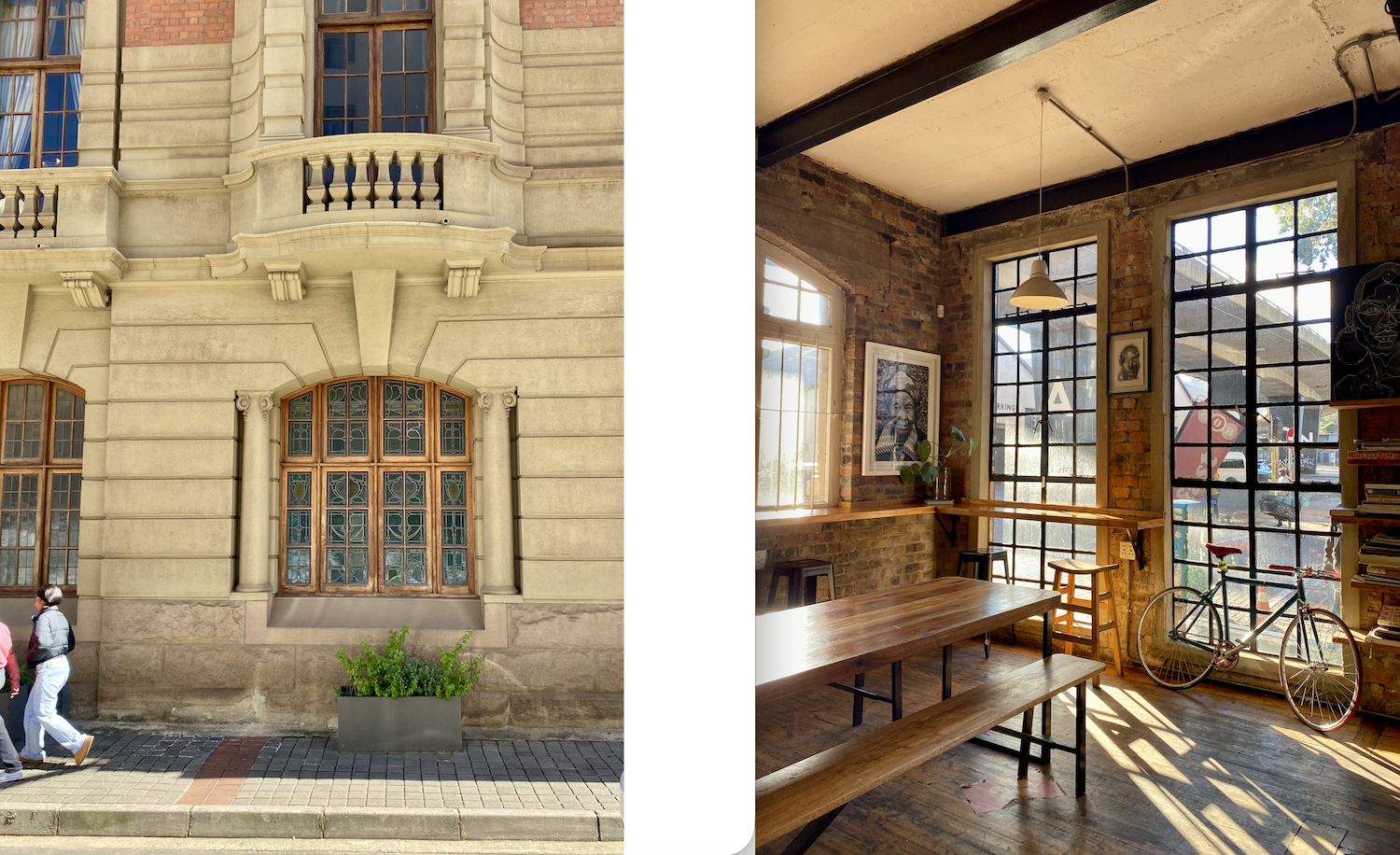
Long dismissed as a transit city for travellers heading on safari or down to Cape Town, South Africa’s metropolis, Johannesburg, is emerging as one of Africa’s most dynamic cultural capitals. Johannesburg goes by many names: Egoli, Gauteng, Jozi; it is a relatively young ‘Gold Rush city, founded in 1886; in 2026, it is the richest city in Africa.
It’s a city I have spent a lot of time in and am deeply fond of; my father emigrated there when I was 8 years old. I’ve loved watching Johannesburg transform into one of Africa’s most vibrant cities.
On a recent visit in May 2026, I was fortunate to explore with locals, family, and on my own. Travelling solo in Johannesburg was a great way to find out whether I –a female solo traveller- felt safe. I challenged myself, as travel journalists like to do, to take risks, to go places that I naturally was drawn to, some I had never been before (partly due to bad press about crime).
I wanted to rewrite the narrative, to share that Johannesburg is safe for tourists. The reality: in some places, I didn’t feel safe, and certainly wouldn’t have gone alone after dark. City guide newsletter Johannesburg in Your Pocket sums it up well: “Like any big city, Johannesburg has its challenges. Be sensible rather than paranoid.” Practical advice: leave valuables at the hotel, use ATMs inside banks, avoid using your phone on the street, and don’t hesitate to ask locals for help.
In general, I felt safe alone and with my family, including a 4-year-old niece. It’s hard to summarise Johannesburg in one sentence; it doesn't fit neatly in a box. However, I can say the energy is magnetic, and the people are genuine, real, and warm.
This is a list of my favourite things to do in Johannesburg. They offer powerful insight into the country’s past and reveal the creative energy transforming the city today.
Read this article if you are looking for a recommended place to stay in Johannesburg.
Apartheid Museum
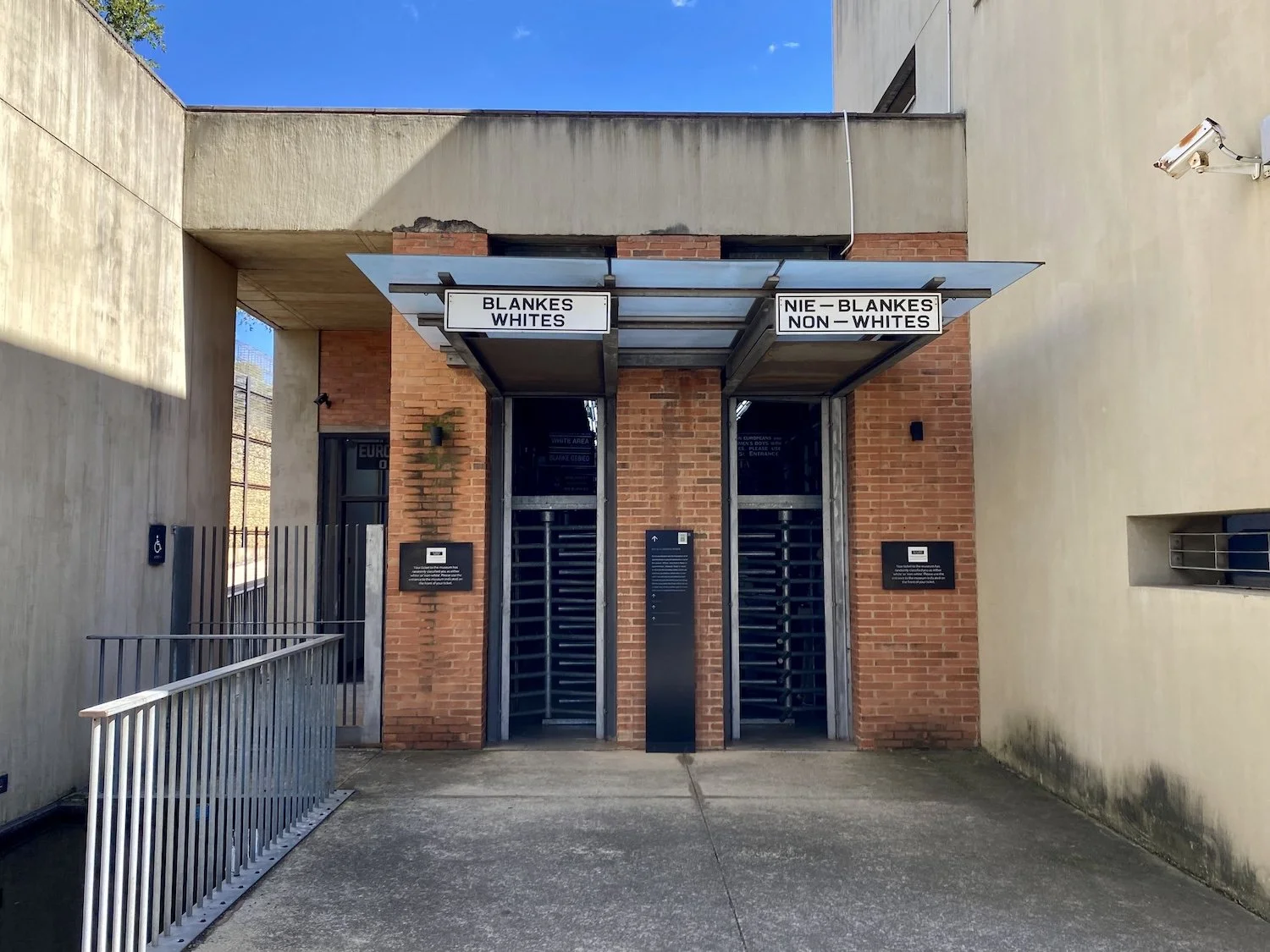
This powerful museum offers an immersive, educational overview of the rise and fall of segregation. Apartheid: the system of segregation or discrimination on grounds of race in force in South Africa (1948-1991). It is not for the faint-hearted. My journey through the Apartheid Museum lasted 1.5 hours (allow up to 3 hours for a longer, detailed historical tour, taking it all in). The museum takes you back to the discovery of gold in Johannesburg and how people were drawn from around the world, creating the city’s diverse, racially mixed community. Explaining how apartheid was designed to prevent this racial mixing. Many of the horrific details are documented and displayed in the museum: confinement, darkness, rules, torture, uprisings, massacres. Painful. At the exit, visitors are asked to move a stone to the pile as part of their commitment to building a new future, then walk through the garden afterwards. A sign says, “Sit, reflect, and then walk free”.
Hop-on Hop-off Bus with City Sightseeing
Two routes are offered, check details here. One for Johannesburg highlights, including 2.5 hours, each 40 minutes (stop). One for Soweto. Double-decker bus; tour starts at Rosebank; you can jump on anywhere. Also, note for Getting Around, Uber works well in Johannesburg, see FAQ below.
Nelson Mandela Foundation
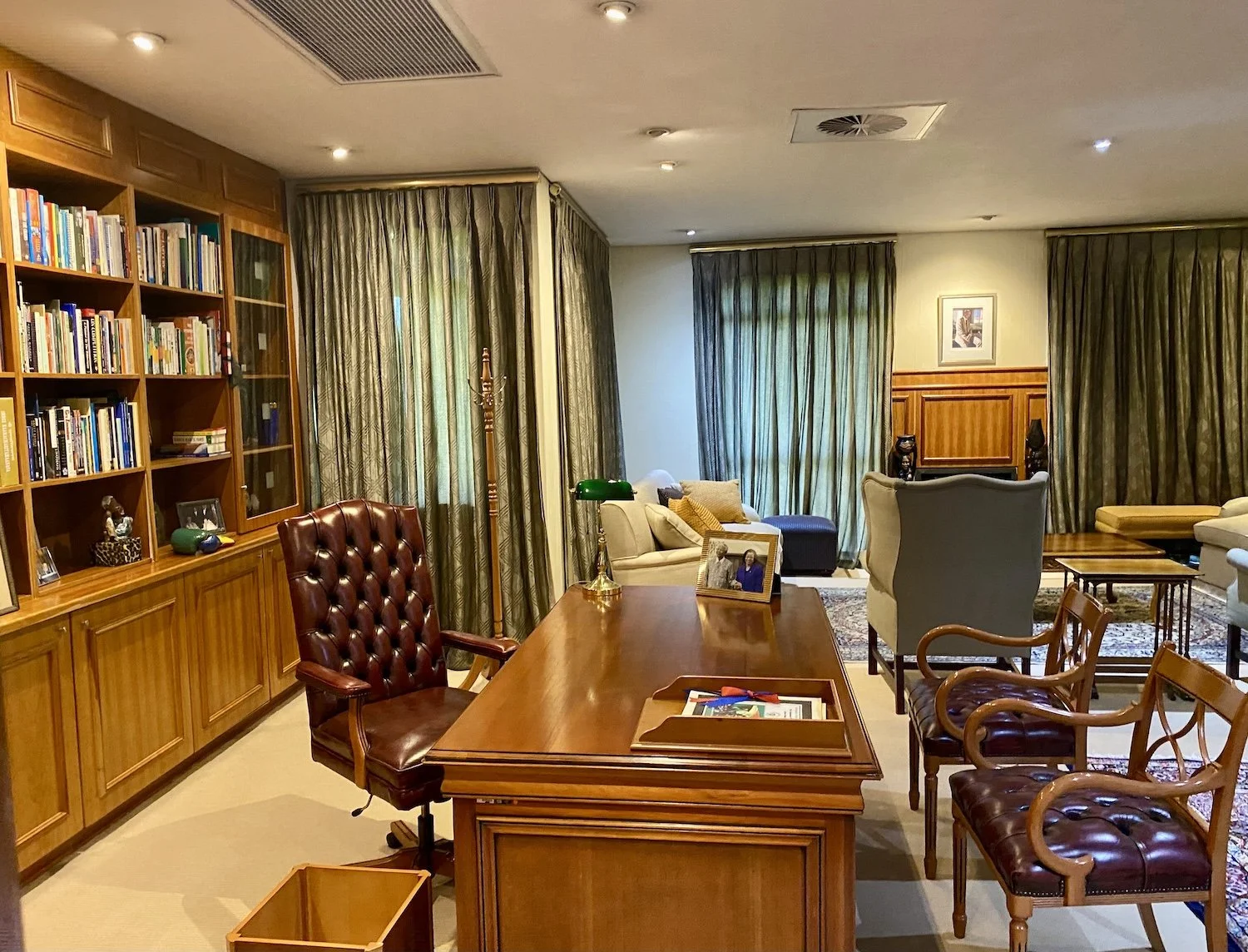
A non-profit museum and educational centre dedicated to preserving Mandela’s legacy. I started my day touring here and was pleasantly surprised. Having not heard much about it before, I liked that it was close to my hotel - The Hyde in Rosebank- and a bite-sized museum with enough to be interesting, not too much to be boring. Ideal thing to do in Johannesburg if you are short on time and won’t make it to the Apartheid Museum. The foundation tells Nelson’s life story (briefly) through childhood family photos, letters, and other significant historical items from his presidency, including his briefcase, Nobel Peace Prize medal, and traditional Xhosa attire. Makes you aware of the many sacrifices Nelson Mandela made throughout his life. You can visit Nelson Mandela’s former post-presidential office (2002-2010), preserved as it was left on his last day in 2010.
Book a private guided city tour
Spend time with Hugh Fraser, a local architect, historian, and specialist guide, whose walking tours, “Footsteps of Mandela,” have been running for two years and are very popular. Hugh takes curious visitors on a journey, exploring the city's turbulent history to the present day. He will show you some of the more unusual things to do in Johannesburg. I particularly enjoyed being in ‘town’ with him, around Braamfontein, Witwatersrand University. He brought the brown buildings to life: brick, composite concrete, Brutalist, Neoclassical, 1930s. Seeing it through an architect’s expert eyes.Banks, apartments, and downtown offices. He also offers Jewish Tours of Johannesburg, and for locals, “Jo’burg for Jo’burgers”. See 58 Seconds for his contact and tours.
Visit Constitution Hill
Constitution Hill, a living museum, the home of the Constitutional Court, tells the story of South Africa’s journey to democracy. You can visit the courtroom and some newer buildings. It was closed when we visited because of a protest; I now understand that Constitution Hill is often used for protests and rallies, so while we didn't get to see inside, we saw it in use as it is today.
Lunch at the Rand Club
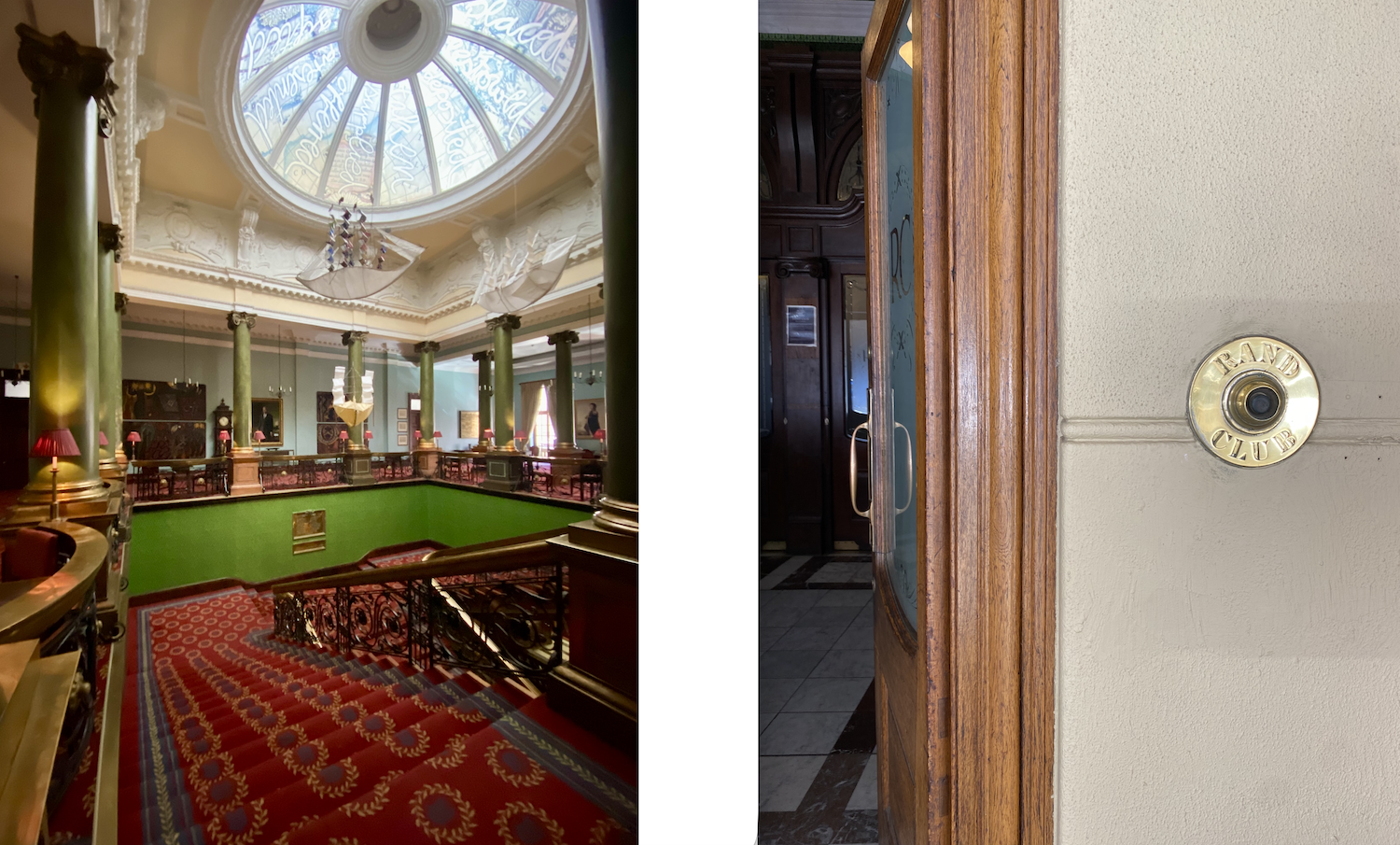
This members’ club (open to the public for light meals). Hugh Fraser introduced me to the Rand Club: “Buildings are witness to the good and the bad”, a silent recorder of human behaviour. Modelled on the Reform Club London, a members' club, the Rand Club was founded by the Randlords, Jo’burg’s mining magnates. Interesting heritage architecture. Nowadays, there’s a Black woman as the Chairman. It has Africa's longest bar; it can be rented for private events these days. Faded grandeur, huge ballrooms; apparently Queen Elizabeth II broke the gentleman-only tradition to celebrate her 21st birthday here in 1947. Nowadays you can visit for lunch; book in advance.
Tour Ellis Park Stadium
The Springboks Stadium, South Africa’s rugby team, is home to historic wins. Rugby fans can book to see a game; out of season, they can book to visit the stadium’s museum and collection of Springbok memorabilia.
Stay at vibrant design hotels
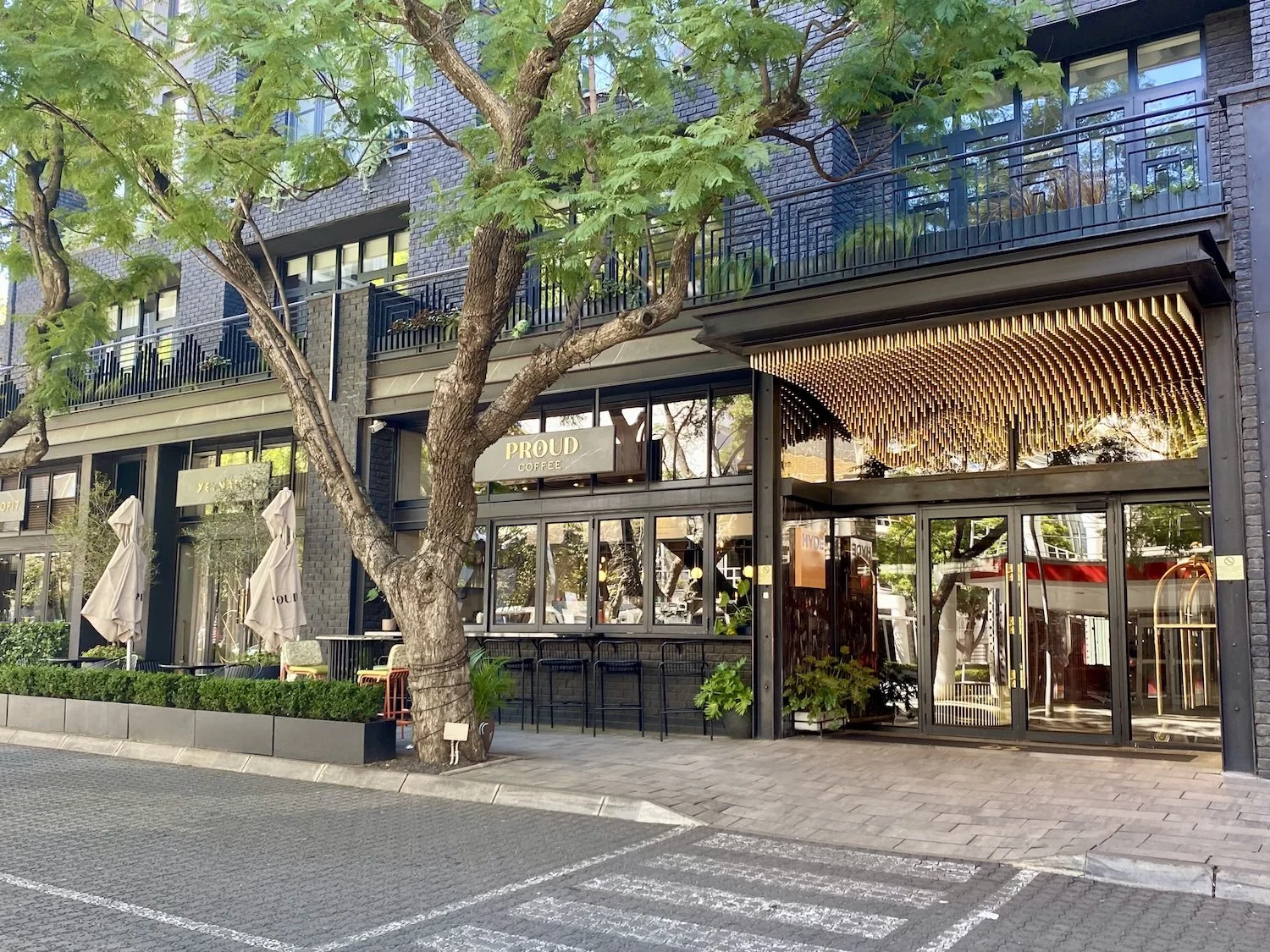
You can enjoy Jozi’s creative energy through its design hotels and boutique guesthouse stays. On arrival, I stayed at The Hyde Rosebank (opened Nov 2024), and loved it for the safe, central location, proximity to the Gautrain shuttle (airport train https://www.sallykirby.com/blog/is-the-gautrain-safe-a-solo-travellers-guide-to-johannesburgs-airport-train). I also loved the super friendly/ can-do staff, stylish rooms, and dining areas, including Proud Mary, a buzzy, award-winning restaurant. On the night before departure, we stayed (my brother and his young daughter) at The Peech Hotel in Melrose, great for families, with two small pools, in a lovely location in a quiet, green suburb, and excellent in-house dining. For more hotel recommendations in Johannesburg, take a read of my “Where to Stay in Johannesburg”. https://www.sallykirby.com/blog/where-to-stay-in-johannesburg
Shop your heart out!
Shopping is a popular thing to do in Johannesburg. From the traditional covered shopping precincts and malls in Rosebank and Sandton, to high street-style shopping in Parkhurst, and a growing number of ‘meet the maker’ creative communities gather at 44 Stanley and Victoria Yards , both industrial spaces that have been regenerated and now home to artist studios, design spaces and foodie offerings. 4th Avenue Parkhurst is for those who love shopping al fresco and mooching along a high street. A pretty suburb, predominantly residential, has two main avenues lined with interior design/antique, clothing, and lifestyle boutiques. Plus, busy bars, cafés, and neighbourhood restaurants spill onto its vibrant streets. Street parking can be tricky; best to take an Uber.
Explore the art scene at galleries and community events
I read somewhere that art is the new gold in Johannesburg, creativity is pumping. A country that was historically torn apart by segregation understands the beauty of diversity and celebrates creativity and cultural differences. The importance of connection and cultural initiatives, bringing people together safely in secure pedestrianised zones. First Thursdays Johannesburg, is held on the first Thursday of every month, spend an evening visiting independent galleries, design studios, museums, restaurants and bars along Keyes Art Mile.
Some of the city’s art galleries include: Wits Art Museum, Asisbenzi Art Gallery and the Goodman Gallery. Established in 1966, the Goodman Gallery was founded to encourage contemporary South African artists to exhibit, despite Apartheid. Today, its contemporary art exhibitions continue to challenge the norm.
Sundowner with a city skyline view
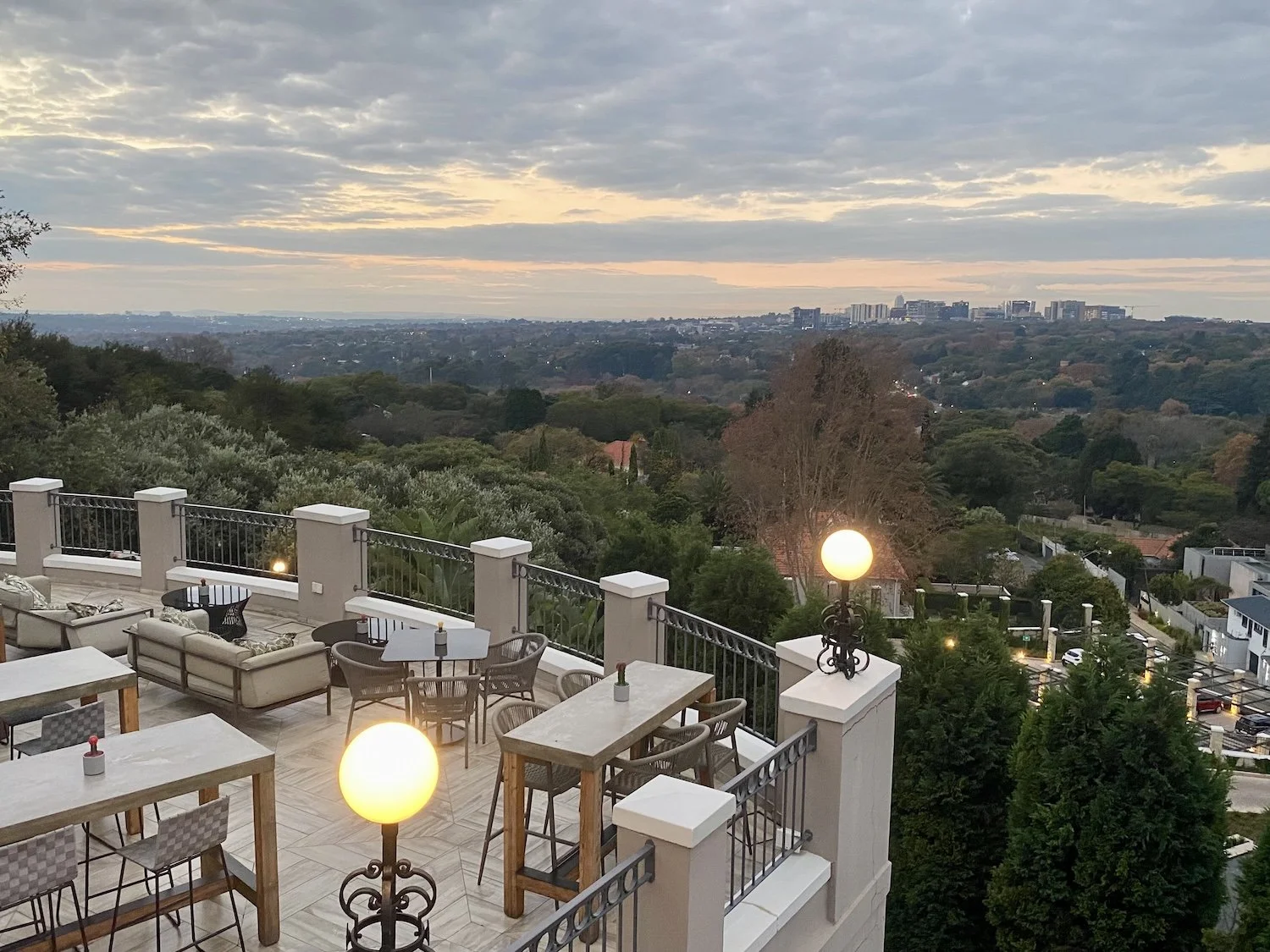
The city is very hilly; some hotels, like the Four Seasons Westcliff, take advantage of this elevated viewpoint. Here, Flames Bar is a popular spot for a sunset drink with a view.
Neighbourhood markets
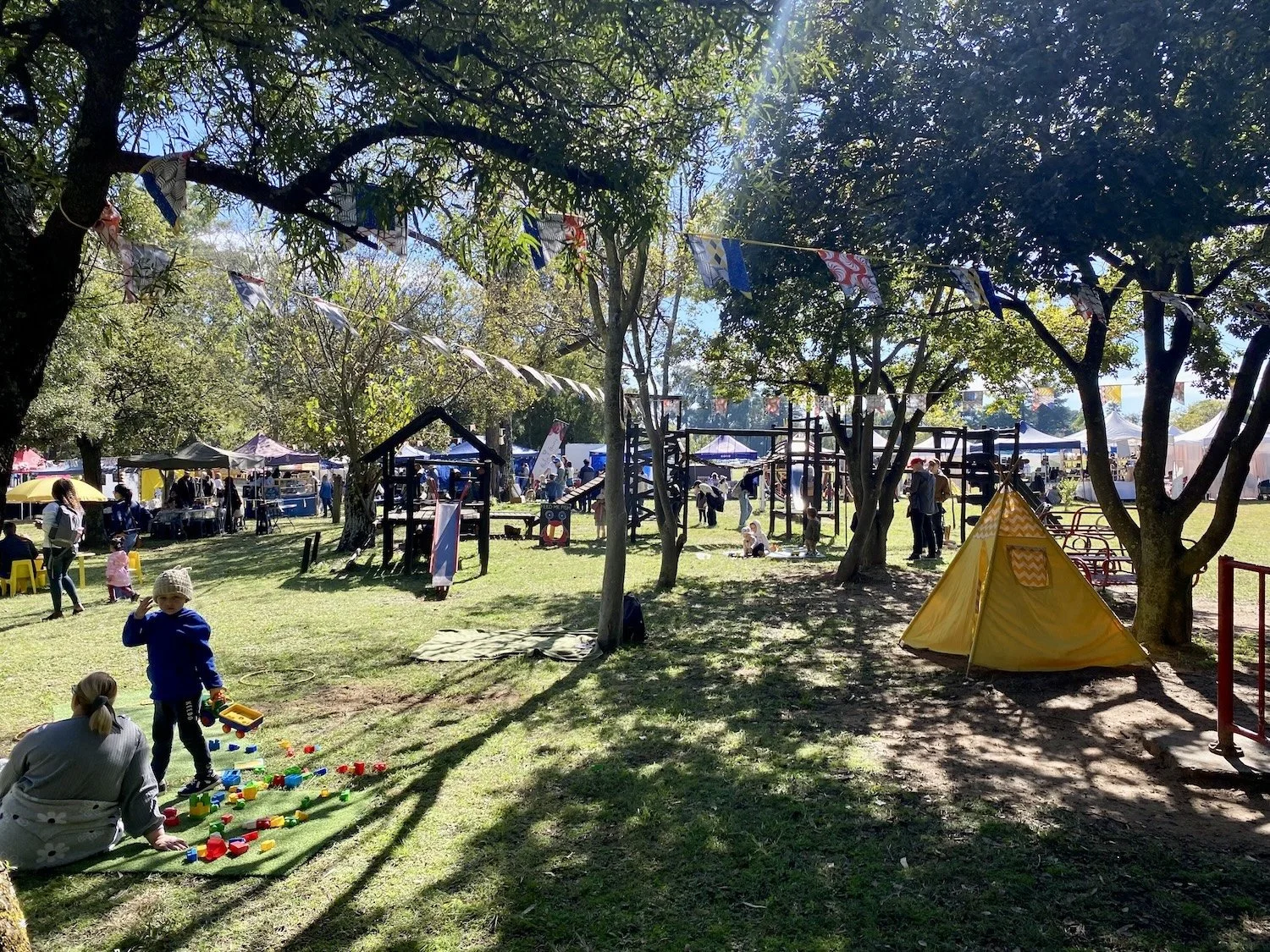
One of the best things we discovered in Johannesburg, as a family, was the Field Market, Field and Study Park, Parkmore. It’s held on the second Saturday of the month, March to December (9am-3pm). A really fun and family-friendly outdoor market in a pretty leafy park. Food stalls, live music, a bar, handmade gift stalls, artists. Lots for kids (pony rides, pottery painting, giant Jenga, woodland play area). Bunting, tall trees for shade, coffee sacks and fallen trees for seating. Dogs are allowed, on leash.
Maboneng precinct
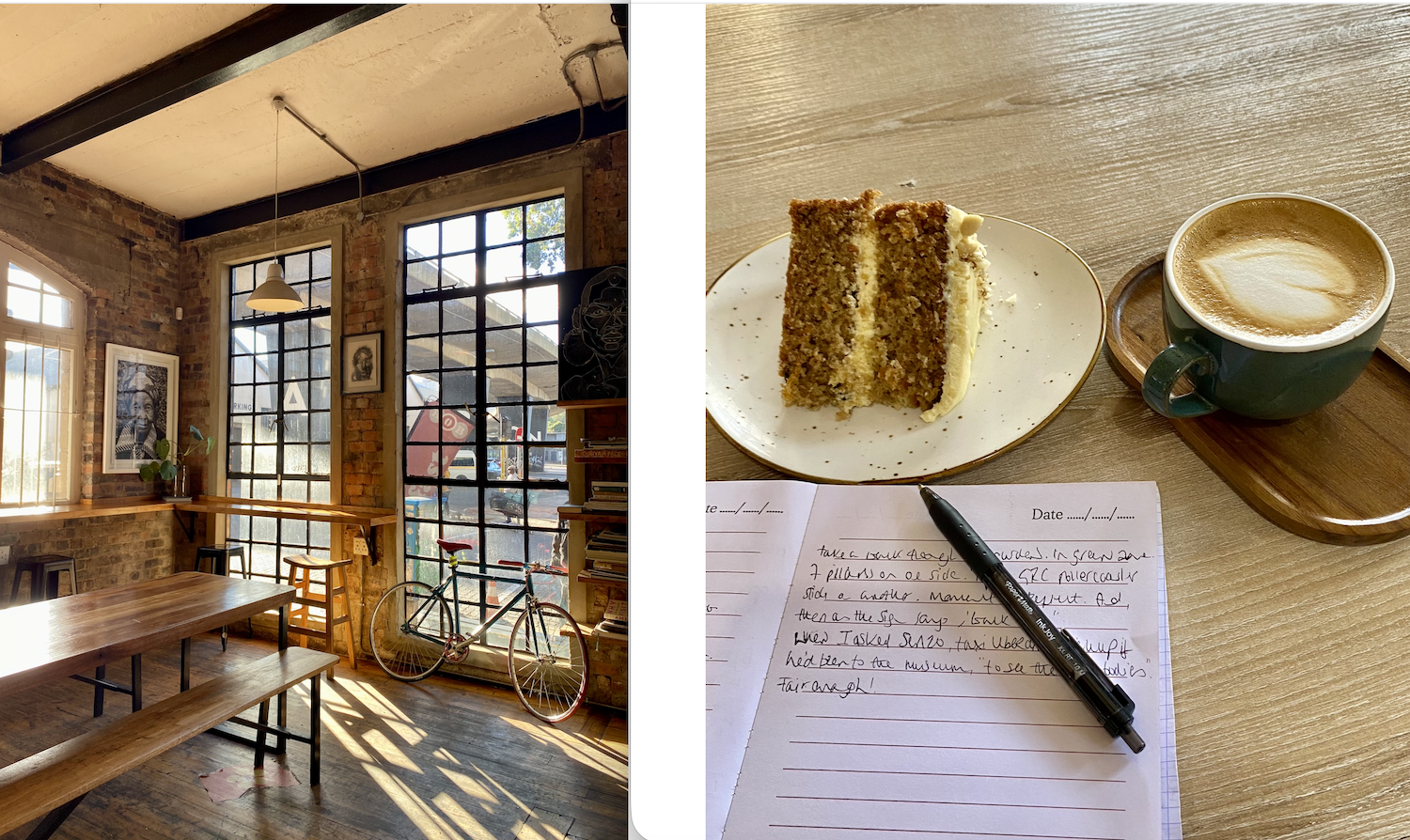
A regenerated urban space. The name comes from a Sesotho word meaning “place of light”. Today it is a hub of creative energy, full of personality and streets that feel alive! Bringing life back to this downtown Johannesburg neighbourhood. You’ll find coworking, art studio space, business offices, hotels, galleries and shopping. I was on my own for this part of the exploring, and headed to “Home of the Bean”, a friendly neighbourhood café on Fox Street, the main street, serving great coffee and cakes. I enjoyed catching up on some note-taking, writing this ‘things to do in Johannesburg’ article and chatting with the friendly staff for local recommendations on all things Jozi. One of the team also walked me along Fox Street and introduced me to some of the local designers. I was a little flustered by the man in a high-vis jacket who came to stand next to me whilst I waited for the Uber to arrive; he “wanted me to feel safe”. I would visit in the morning, not late in the day or after dark, if I was nervous and travelling solo.
Cradle of Humankind
This World Heritage Site lies about 50km north-west of Johannesburg. Explore caves and fossils; the site is home to the world's largest known concentration of human ancestral remains. Discover what the world was like when our human ancestors were evolving some 2 to 3 million years ago. It’s an hour’s drive from Rosebank, so allow around 5-6 hours for this excursion. GetYourGuide has several listings, including travel time.
FAQs
Cash v card payments. Many places don't accept cash. Accept card or contactless payment only.
How to get around: Uber works really well in Johannesburg. Approx. Price in 2026: 40 rand (15-minute journey). To/from OR Tambo International Airport, the Gautrain airport train to Sandton (and other destinations) is direct, easy, and quick. Read about this experience here.
For up-to-date events in Johannesburg, I found the Jozi My Jozi website to be a handy resource.
Overwhelmed by the amount of information online and need help planning your trip to South Africa? I offer personalised travel-planning video calls (30 minutes, GBP50/USD65) to answer your questions quickly and clarify the best itinerary for you.